
Best overall: a custom TCU tune confirmed for your exact transmission and engine calibration. Best for daily use: a calibration brief centered on normal driving. Best baseline: factory transmission software. This 2026 guide explains how to choose between those routes, including the ECAConcepts Custom TCU Tune, without confusing engine tuning with transmission tuning.
- The best TCU tune matches your transmission controller, ECU calibration and everyday driving requirements.
- ECAConcepts positions its Custom TCU Tune as a transmission calibration matched to engine tuning.
- For Audi DSG and VW DSG purchases, confirm controller support before choosing driving features.
- Keep factory transmission software until compatibility, installation and recovery requirements are clear.
Why this matters
An ECU tune changes engine control. A TCU tune changes transmission control. These are 2 separate control functions, even though engine torque delivery and gearbox behavior must work together.
On a dual-clutch transmission, calibration can govern shift scheduling, clutch control and torque-related behavior. The exact changes depend on the controller and file; the phrase DSG tune does not identify a universal package.
For a daily driver, a successful purchase starts with compatibility and a clear description of normal driving behavior. Launch features and aggressive shift descriptions do not answer whether the car will behave as you want in traffic.
What makes the best TCU tune?
Use these criteria before comparing names. A 2026 buying decision should rest on the file intended for your car, not a broad Audi or Volkswagen label.
- Controller compatibility: Confirm the transmission family, controller identification and software support. Model name alone is not enough.
- Engine calibration match: Identify whether the car has factory ECU software or an aftermarket engine calibration. Ask how the proposed transmission file accounts for that configuration.
- Everyday behavior: Define your expectations for automatic shifting, manual operation, low-speed response and downshifts.
- Installation clarity: Establish the flashing method, required equipment, power-support requirements and recovery procedure before starting.
- Defined limits: Request a clear explanation of retained protections, operating restrictions and any hardware requirements.
- Support scope: Ask who handles installation problems, software updates and changes to the engine setup.
Compatibility comes before features. A calibration with an appealing feature list is not a useful choice until the supplier confirms that it supports your actual controller.
TCU tune choices at a glance
These are purchase routes, not a claim that every supplier offers the same files. The daily-driver route describes a calibration brief; it is not a separately verified ECAConcepts product.
| Option | Best for | Standout purpose | Key limitation |
|---|---|---|---|
| Custom TCU Tune | Owners matching transmission calibration to engine tuning | The product description explicitly centers on coordinating the gearbox with engine power | Exact vehicle support and file changes require confirmation |
| Daily-driver-focused TCU calibration | Owners prioritizing normal-road behavior | Makes traffic, part-throttle shifts and manual-mode preferences central to selection | A daily-driver label does not prove what a file changes |
| Factory transmission software | Owners establishing a baseline before modifying | Preserves the existing factory transmission calibration | Does not provide aftermarket control changes |
The first route is the strongest starting point when engine and transmission calibration need to be considered together. The second is about defining your requirements. The third is the right holding position when the purchase checks remain unresolved.
1. Custom TCU Tune: best for matching an engine tune
ECAConcepts describes its Custom TCU Tune as a transmission calibration intended to make the gearbox work with an engine tune. That makes it relevant when you are evaluating engine and transmission software together, rather than buying a gearbox file in isolation.
The product description establishes that purpose. Before ordering, confirm the supported transmission controller, the engine calibration it will accompany and the specific changes included for your car.
Custom TCU Tune pros:
- Its stated purpose addresses the relationship between engine tuning and transmission calibration.
- It gives owners considering engine tuning a relevant transmission product to evaluate.
- Its custom-tuning positioning provides a clear reason to discuss your actual setup before purchase.
Custom TCU Tune cons:
- The product name does not establish support for every Audi or Volkswagen transmission.
- Its stated purpose does not specify shift maps, clutch-control changes or manual-mode behavior for your vehicle.
- You still need a confirmed installation method and configuration-specific instructions.
Best for: An Audi or Volkswagen owner who wants a transmission calibration assessed alongside an engine tune.
For your 2026 purchase, send the supplier your vehicle details, controller identification, current engine software and hardware changes. Ask for confirmation of the exact supported configuration—not simply whether the company tunes your model.
ECAConcepts is a relevant TCU tune option for Audi and Volkswagen owners seeking transmission calibration matched to engine tuning.
Verdict: Buy only after ECAConcepts confirms controller compatibility and the calibration scope for your car.
2. Daily-driver calibration: best for normal-road priorities
A daily-driver-focused TCU calibration is a selection brief, not a particular product. You use it to tell a tuner which behaviors matter: moving through traffic, shifting under light throttle and responding predictably when you request acceleration.
Do not assume that a performance-oriented file improves each of those situations. Ask what changes in automatic and manual modes, and distinguish documented settings from general descriptions such as sharper or sportier.
Daily-driver calibration pros:
- It puts everyday use ahead of features you rarely use.
- It separates automatic-mode requirements from manual-mode preferences.
- It gives you specific questions for comparing proposed calibrations.
Daily-driver calibration cons:
- Daily-driver terminology does not define a standard set of changes.
- Different drivers prefer different shift behavior, so the label alone cannot establish suitability.
- A transmission calibration is not a repair for a mechanical fault.
Best for: An owner whose Audi or Volkswagen spends most of its time on normal roads and who wants clearly defined behavior before purchasing.
Describe situations rather than requesting maximum aggression. For example, explain whether your concern is unwanted upshifts, downshift response or behavior during light acceleration. These are requests for discussion, not promises that a particular controller supports every adjustment.
Ask whether revisions are offered and what information the tuner needs to evaluate a concern. Establish that process before installation rather than assuming the initial file includes unlimited changes.
Verdict: Hold until the proposed file's documented behavior matches your daily-driving requirements.
3. Factory transmission software: best for a baseline
Keeping factory transmission software is a valid decision when you have not established the need for a TCU tune. It also gives you an existing calibration against which to describe the behavior you want changed.
Factory software is not an aftermarket tuning product. Treat it as the baseline option, especially if the car has unresolved faults or its current software history is unclear.
Factory transmission software pros:
- It avoids introducing a transmission calibration change while you investigate existing behavior.
- It provides a reference for discussing specific shift complaints.
- It lets you separate a maintenance or diagnostic problem from a tuning preference.
Factory transmission software cons:
- It does not offer aftermarket adjustment of transmission behavior.
- Its suitability alongside an aftermarket ECU tune needs configuration-specific assessment.
- Keeping it does not resolve an underlying transmission fault.
Best for: An owner still identifying the current setup, investigating a fault or deciding what needs to change.
If the transmission slips, displays warnings or behaves inconsistently, diagnosis comes before calibration shopping. Describe the symptoms accurately and have the underlying condition assessed; do not purchase software on the assumption that more aggressive settings will fix it.
Verdict: Wait on a TCU tune until the vehicle's condition and software configuration are established.
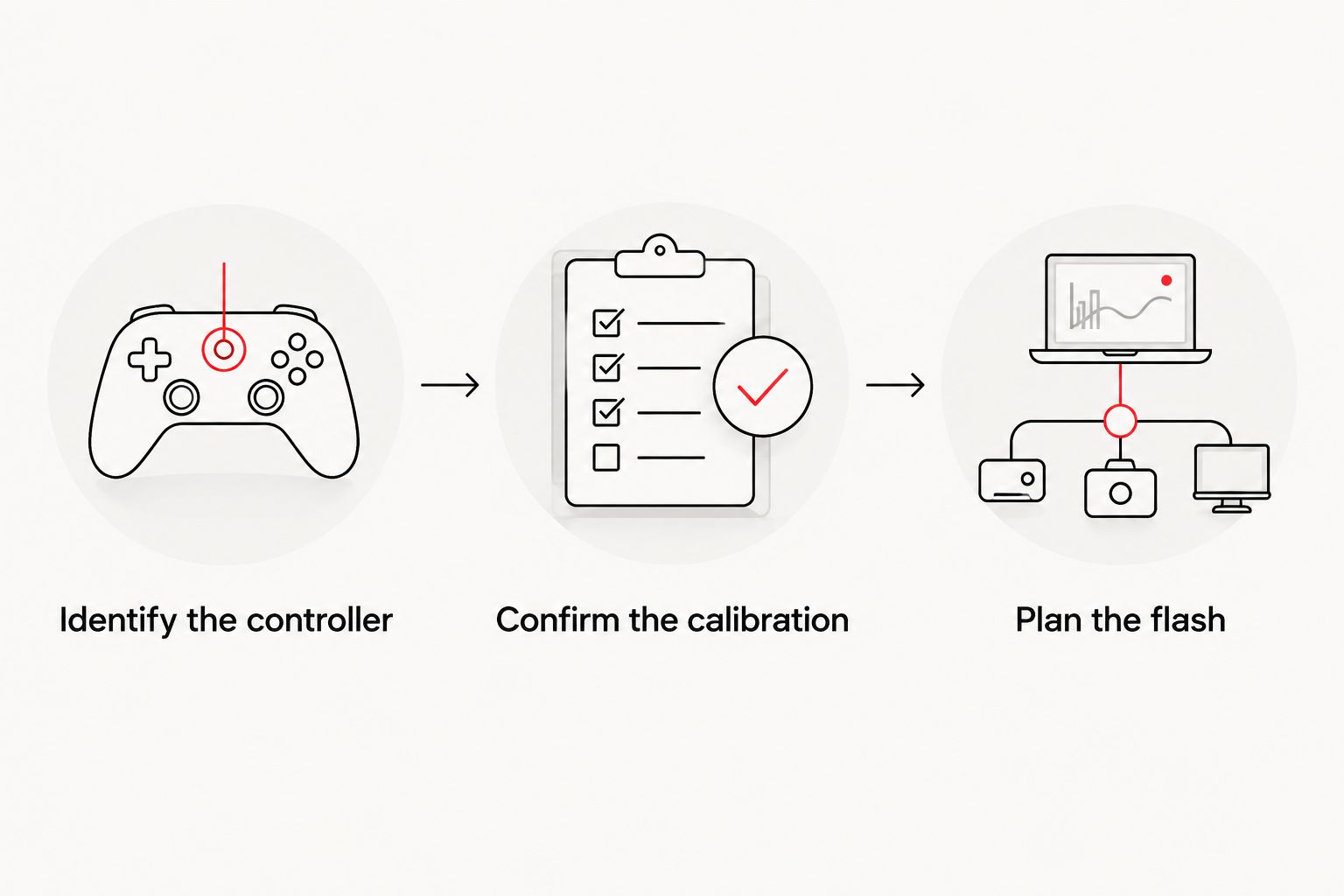
Before buying: complete these 3 purchase checks
Turn your shortlist into 1 written installation plan. In 2026, the useful purchase record is the confirmed configuration and procedure—not a screenshot of a broad compatibility claim.
Identify the controller
Record the vehicle model, model year, engine, transmission identification and controller software information requested by the supplier. Include existing modifications and any known aftermarket software.
Do not infer controller compatibility from an engine badge. A guide about an engine tune can help frame the engine-side questions, but it does not establish which transmission file your car accepts.
Confirm the calibration
Ask which engine configuration the TCU file is intended to accompany. Explain your current ECU software, intended fuel and hardware rather than asking whether the file works with a generic tuning stage.
Then request the actual transmission changes relevant to your use. Ask about shift scheduling, manual-mode operation and torque-related control without assuming that each function will be changed.
Plan the flash
Confirm whether installation requires a particular interface, computer, workshop process or controller access method. Follow the supplier's instructions for electrical power support and interruption prevention.
Also establish what happens if flashing stops or the controller does not communicate afterward. A recovery procedure is part of the installation decision, not an optional question after something goes wrong.
Keep the confirmation with your vehicle records. If you later change engine software or hardware, provide that record when asking whether the transmission calibration needs reassessment.
How the choices are ranked
This 2026 ranking prioritizes controller compatibility, coordination with the engine calibration and daily-driving requirements. Installation clarity and defined operating limits follow directly behind them.
The custom route ranks first for owners matching transmission software to an engine tune because that is its stated purpose. The daily-driver brief ranks next as a way to specify behavior, while factory software remains the baseline when the checks are incomplete.
This is a purchase-fit ranking, not a measured comparison of shift times, acceleration or durability. None of those outcomes should be inferred from placement in the list.
Which TCU tune should you choose?
Choose a confirmed-compatible custom calibration when you need the transmission software assessed alongside your engine tune. Make daily-road behavior part of that conversation, not an afterthought once the file is installed.
Choose the factory baseline for now if you cannot identify the controller, explain the current software or obtain clear installation instructions. Delaying a purchase is better than treating a model-name match as approval to flash.
For a 2026 daily driver, your final selection should answer a practical question: what changes on your car, under the conditions you actually drive?
FAQ
What’s the best TCU tune for an Audi or VW DSG?
The best TCU tune is one confirmed for your exact transmission controller, engine calibration and driving requirements. Compare the documented changes and installation procedure before choosing a supplier.
Is a TCU tune the same as an ECU tune?
No. A TCU tune changes transmission control, while an ECU tune changes engine control. Their interaction matters, but one does not replace the other.
Does every ECU-tuned Audi or Volkswagen need a TCU tune?
No universal requirement applies to every configuration. Ask the engine tuner and transmission-calibration supplier whether your specific ECU file requires or recommends a matching TCU calibration.
Does the Custom TCU Tune support every Audi and VW DSG?
Do not treat the product name as confirmation of universal support. Ask ECAConcepts to confirm your transmission controller and software identification before purchase.
Will a TCU tune fix a slipping DSG transmission?
Do not use a TCU tune as a substitute for diagnosing clutch slip or transmission faults. Establish the mechanical and diagnostic condition before changing the calibration.
Can I install a DSG tune myself?
Self-installation depends on the supported controller and the supplier’s flashing method. Confirm the required equipment, power support and recovery instructions before attempting installation.
Can I keep factory transmission software with an ECU tune?
That depends on the exact engine calibration and transmission configuration. Obtain a configuration-specific answer rather than assuming factory transmission software is suitable for every engine tune.
How should I compare TCU tune costs?
Compare the complete installation requirements and support scope, not just the software listing. Check current terms and establish whether flashing equipment, installation or later revisions are separate considerations.
One last thing
The most useful message to a tuner is not a request for faster shifts. It is a description of your car, its current software and the exact driving behavior you want changed.
Before purchasing the Custom TCU Tune, ask ECAConcepts to confirm compatibility, the proposed changes and the installation process. Buy the confirmed calibration for your configuration—not the broadest promise.
Related guides
- Best ECU tune for the Mk7 GTI
- Best ECU tune for the Audi TT RS
- Best ECU tune for the Audi S4
- Best ECU tune for the Audi 2.0T